
UNESCO World Heritage Site · 1.5 Million Hectares · Cessna Charter · Ashfeld & Arco Iris Waterfalls · 600+ Birds
Overview
Noel Kempff Mercado National Park is one of the world’s great wilderness areas — a UNESCO World Heritage Site covering 1.5 million hectares in the far northeast of Bolivia, bordering Brazil. It is one of the least-visited major national parks in South America, accessible only by small aircraft and riverboat, which preserves its extraordinary remoteness and ecological integrity. It is named after Bolivian naturalist Noel Kempff Mercado, who was murdered by drug traffickers near the park in 1986 — the outcry following his death led directly to the park’s designation and expansion.
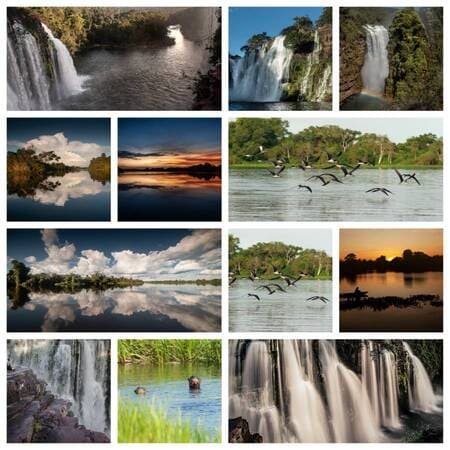
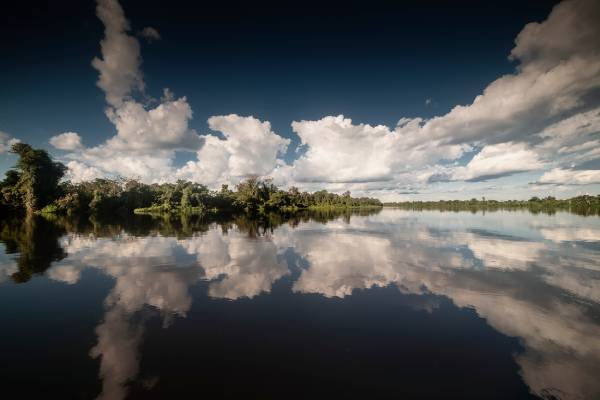
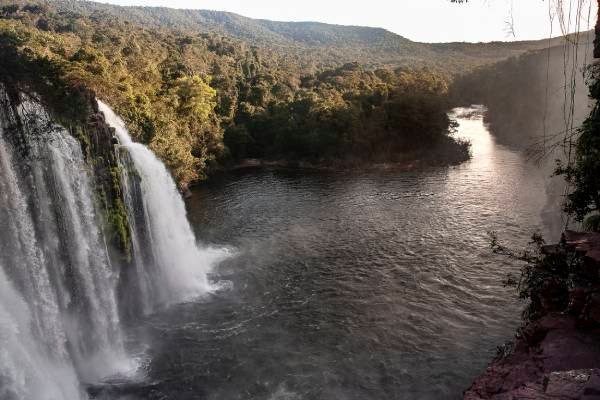
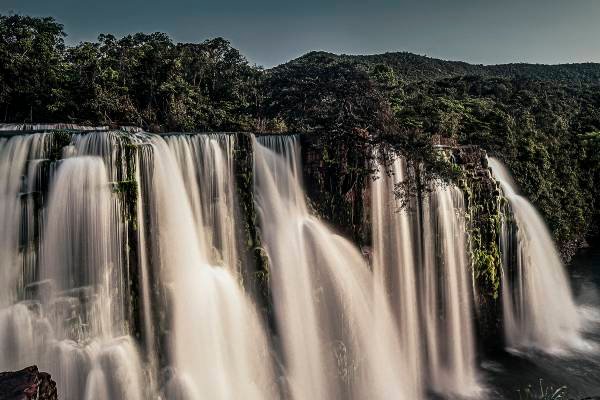
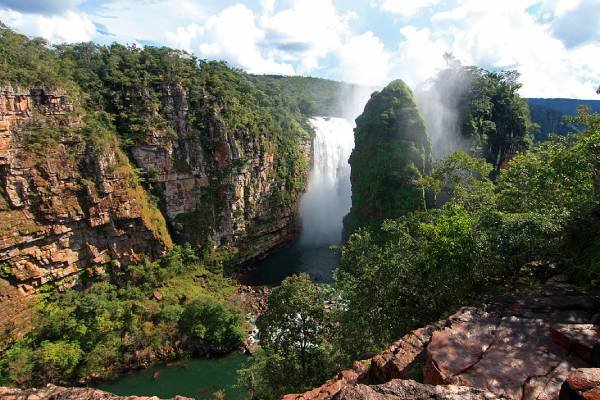
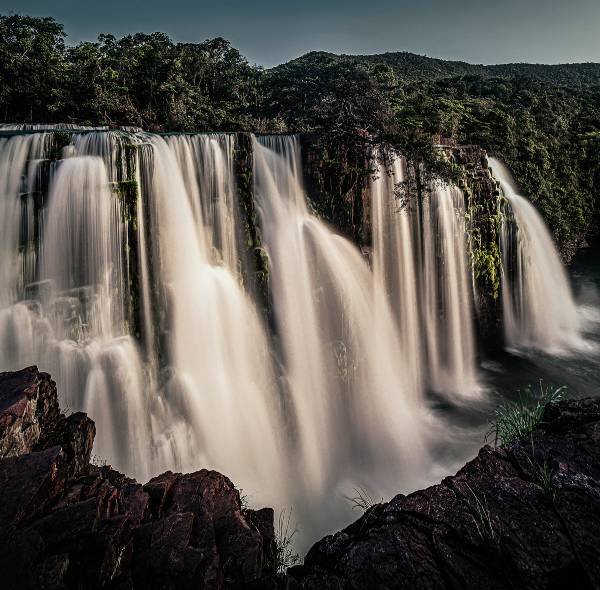
The landscape is astonishing: vast ancient sandstone plateaus (tepuys) rising 700 metres above the Amazonian forest floor, with spectacular waterfalls cascading from their edges. The Ashfeld Falls and Arco Iris Falls are two of the most impressive waterfalls in South America — both accessible only via this expedition. The park records over 600 bird species, 130 mammals, 74 reptiles and 62 amphibians — concentrated in four completely different ecosystem types that converge within its boundaries: Amazon forest, Cerrado savannah, Pantanal wetlands and flooded forest.
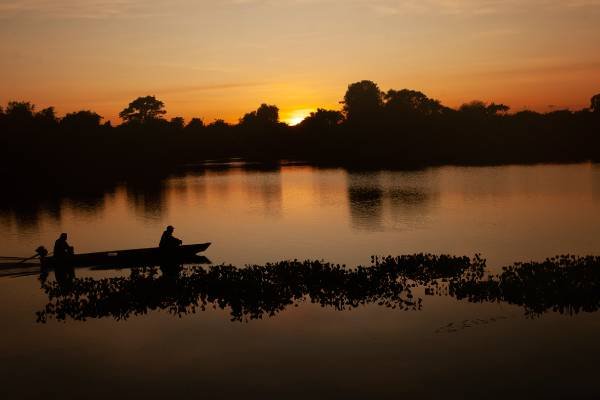
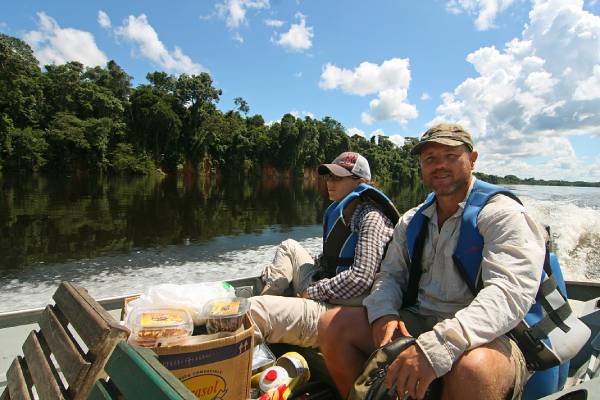
Access requires a charter Cessna from Santa Cruz to the park airstrip at El Cafetal, followed by river travel by motorised canoe. This is a true expedition — not a comfortable lodge tour, but a carefully managed wilderness adventure with experienced guides and all necessary equipment. Accommodation is in tented camp at key locations within the park.
Early morning departure from Santa Cruz El Trompillo Airport by charter Cessna. The 1.5-hour flight north-east crosses the lowland Chiquitos landscape before entering the park boundary and descending to the El Cafetal grass airstrip — one of the park’s two vehicle-accessible entry points. The flight itself provides spectacular aerial views of the tepuy plateaus, the river systems and the forest-savannah mosaic. On arrival, the guide team is waiting at the airstrip. Gear is transferred to the motorised canoe for the river journey upstream to the base camp, passing through gallery forest rich in birdlife. Afternoon orientation walk and wildlife survey around the camp. Overnight at tented base camp.
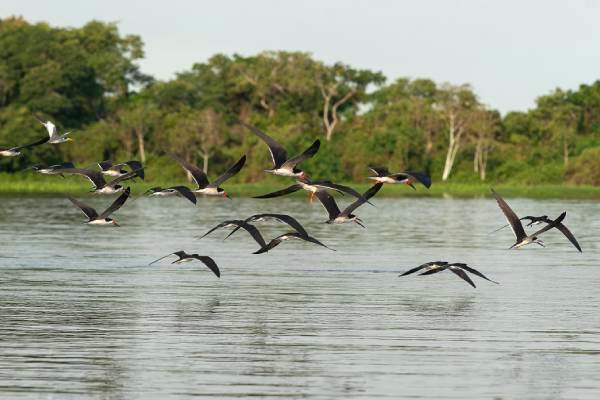
Two full days of exploration from the base camp along the Pimenteiras River and into the surrounding tepuy forest. The morning birdwatching sessions in this area are among the finest in South America — the combination of Amazonian forest, Cerrado edge and riverine habitat concentrates an extraordinary diversity of species, including several Kempff endemics and range-restricted birds found nowhere else. The guide leads systematic surveys timed around the peak activity periods, keeping a running list throughout the day.
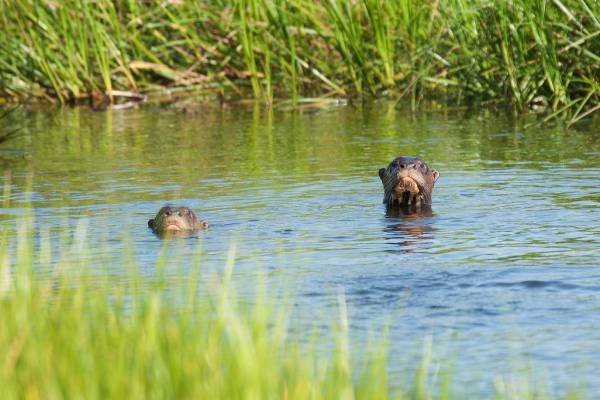
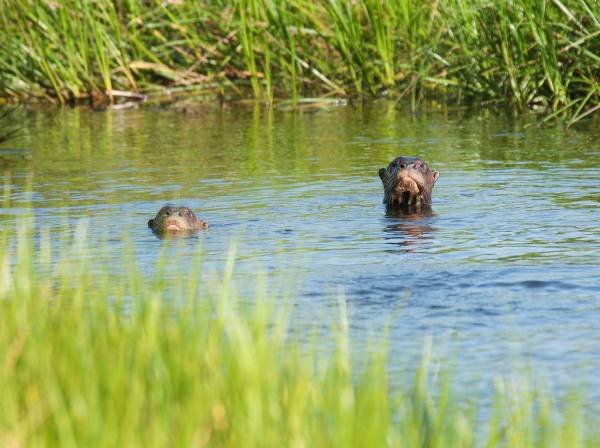
Afternoon river excursions by canoe to explore the waterway margins — giant otters have resident family groups on the Pimenteiras, and river dolphins are frequently observed at the river bends. Evening return to camp with dinner and species checklist review. Night walks with head torches for nocturnal wildlife.
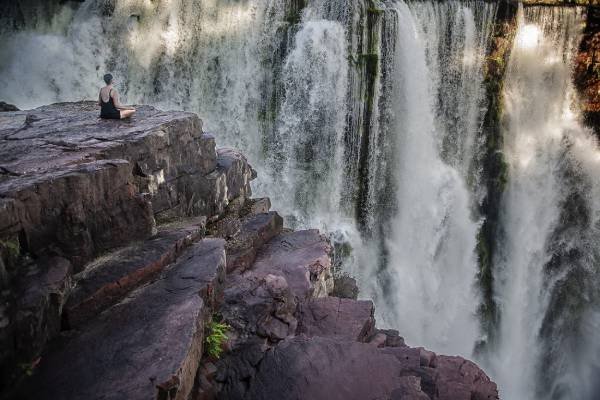
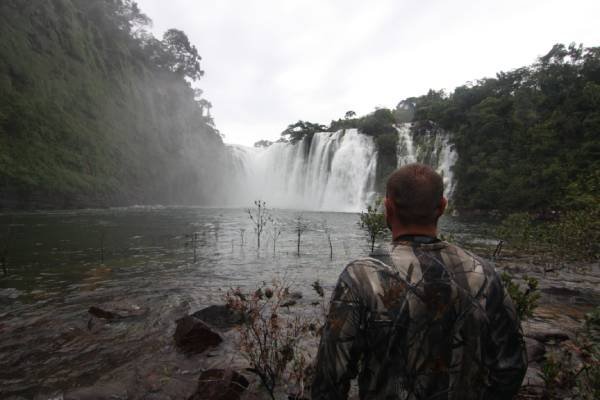
Full day excursion to the Ashfeld Falls — one of the largest and most dramatic waterfalls in South America, where the Paucerna River plunges from the edge of the Caparu Plateau in a broad curtain of water visible from kilometres away. The trail to the falls winds through extraordinary forest at the foot of the tepuy, with continuous birdwatching and wildlife observation opportunities. Swimming at the base of the falls is one of the expedition’s memorable highlights. Overnight at camp near the falls.
Morning departure to the Arco Iris Falls — a different waterfall system at a different point along the tepuy escarpment, with a distinctive character and surrounding forest of its own. The name means “Rainbow Falls” and refers to the permanent mist rainbows visible in the cascade on clear mornings. Final afternoon wildlife surveys and photography. Farewell dinner at camp.
Final morning at the camp — early birdwatching before packing down. River transfer back to El Cafetal airstrip. Charter Cessna departs mid-morning for Santa Cruz, arriving early afternoon. Drop-off at Santa Cruz hotel or airport.
While our guides have exceptional success at locating wildlife, sightings can never be guaranteed — these are wild animals in their natural environment. Our guides are among the most experienced wildlife finders in the region and will do everything possible to deliver a remarkable experience.
Our team replies within a few hours. We also speak Spanish and English.