
Lomas de Arena · Botanical Gardens · 5 Habitat Types · 286 Species Recorded · Full Day
Overview
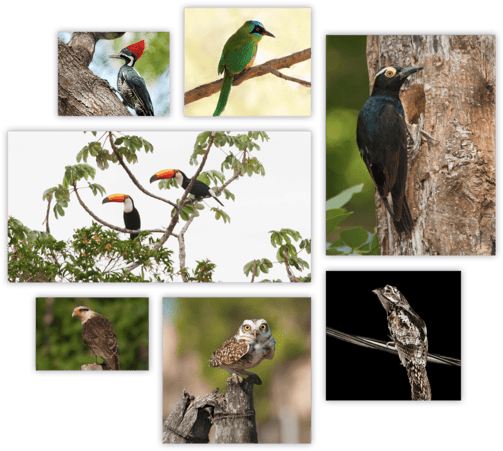
The forests, wetlands and savannahs surrounding Santa Cruz de la Sierra form one of the most productive birding landscapes in Bolivia — and in a full day with an expert guide, it is realistic to record 60 to 80 different species across five distinct habitat types. This tour visits two of the city’s most important protected areas: Lomas de Arena and the Botanical Gardens, each offering a completely different birding environment within easy reach of the city centre.
Lomas de Arena is a 3,000-hectare reserve of sand dunes, lagoons, Chaqueno dry forest and open savannah that has recorded 286 species — 21% of Bolivia’s entire known bird list. It serves as a critical stopover for both austral and boreal migratory species, and at certain times of year birders witness spectacular concentrations of hundreds of individuals. The Botanical Gardens provide a contrasting forested environment where canopy species — toucans, trogons, motmots — coexist with ground-level forest floor specialists.
The guide narrates each sighting in detail, covering identification, behaviour, ecology and conservation status. The tour is suitable for both experienced birders and complete beginners — the guide adapts the level of detail to the group.
habitats covered
notable species
price includes
price excludes
Early morning hotel pickup — the first light hours are the most productive for bird activity. The route to Lomas de Arena takes approximately 25 minutes from central Santa Cruz. The guide begins scanning from the vehicle as we approach the reserve boundary: the roadside agricultural margins often yield early species including raptors and open-country birds before we reach the reserve entrance.
Inside the reserve, the guide leads a systematic walk through the five key habitat zones — Chaqueno forest, pampas swamp edges, open savannah, sand dune lagoon margins and the transition zones between them. At peak migratory periods, the lagoons can hold hundreds of shorebirds and waterfowl; even outside migration the diversity is exceptional. The guide provides continuous identification commentary and detailed natural history notes on each species encountered. Typical morning totals at Lomas de Arena range from 45 to 65 species.
Return to Santa Cruz for lunch. Over lunch the guide reviews the morning’s species list and notes any target species still to be found in the afternoon session at the Botanical Gardens. This is also an opportunity for guests to review photographs, ask questions about identification and discuss the broader context of birding in Bolivia.
The afternoon session at the Botanical Gardens provides access to a completely different suite of species in a forested environment. The guide searches the canopy for toucans, trogons and motmots, and the understorey for flycatchers, antshrikes and ground-foraging species. The Gardens are also productive for wildlife beyond birds — sloths, monkeys and coatis are frequently observed, providing a bonus wildlife dimension to the afternoon session. Return to hotel by approximately 18:30.
Our team replies within a few hours. We also speak Spanish and English.