Where to See Sloths in Santa Cruz, Bolivia: A Responsible Wildlife Guide
By Nicholas McPhee, Co-founder of Nick's Adventures Bolivia
You do not need to travel deep into the Amazon to see a wild sloth in Bolivia. In Santa Cruz de la Sierra, the Municipal Botanical Garden and forested areas around Urubó offer opportunities to look for them close to the city.
Finding one can take a little time. A motionless sloth can blend into the branches and leaves surprisingly well. Once your guide points it out, you begin to notice the details: how it holds on, the position it rests in, or its movements as it reaches for another branch.
Where can you see sloths in Santa Cruz? Mainly at the Santa Cruz Municipal Botanical Garden and in the forests around Urubó, both within easy reach of the city.
In this article, I’ll share where our team looks for sloths, what makes these animals so unusual, and how to watch them responsibly. I’ll also share encounters from our tours and my own experiences helping sloths in and around the city.
1. Where Can You See Sloths in Santa Cruz?
Santa Cruz Municipal Botanical Garden
The Santa Cruz Municipal Botanical Garden, at kilometre 9 on the road to Cotoca, is one of the places we visit to look for sloths. Its trails pass through native woodland and collections of regional plants, providing opportunities to observe wildlife close to the city.
The brown-throated three-toed sloth (Bradypus variegatus) has been documented here, along with other mammals, including black-tailed marmosets and squirrels.
During the walk, we stop to scan the treetops. Sometimes we can see most of the animal through the leaves; at other times, only part of its body is visible. Our guide helps you locate it and find an angle that offers a better view.
The Forests Around Urubó
We also look for wildlife in forested areas around Urubó, another location included in our sloth-watching outings near Santa Cruz.
Urubó covers a broad area with different access points and properties, rather than a single public wildlife-watching site. It is important to know where access is permitted and obtain any necessary permission before entering.
2. Why Do Sloths Move So Slowly?
Their name might suggest an animal that simply sleeps all day. But their slow movements have much to do with how they obtain and use energy.
The brown-throated sloth, recorded at the Botanical Garden, lives mainly in trees and feeds primarily on leaves. This diet provides relatively little energy, and sloths have a slow metabolism to match. Moving slowly helps them conserve energy.
During a visit, you may find a sloth resting rather than moving. We can spend time observing how it settles among the branches, how it supports itself, or what happens when it begins to move.
Its fur holds another surprise: algae growing in the coat can give it a greenish tint. Binoculars can reveal details that would otherwise be difficult to appreciate from the ground.
Despite its calm appearance, a sloth is still a wild animal. Remaining motionless does not mean it welcomes contact or should be approached and touched.
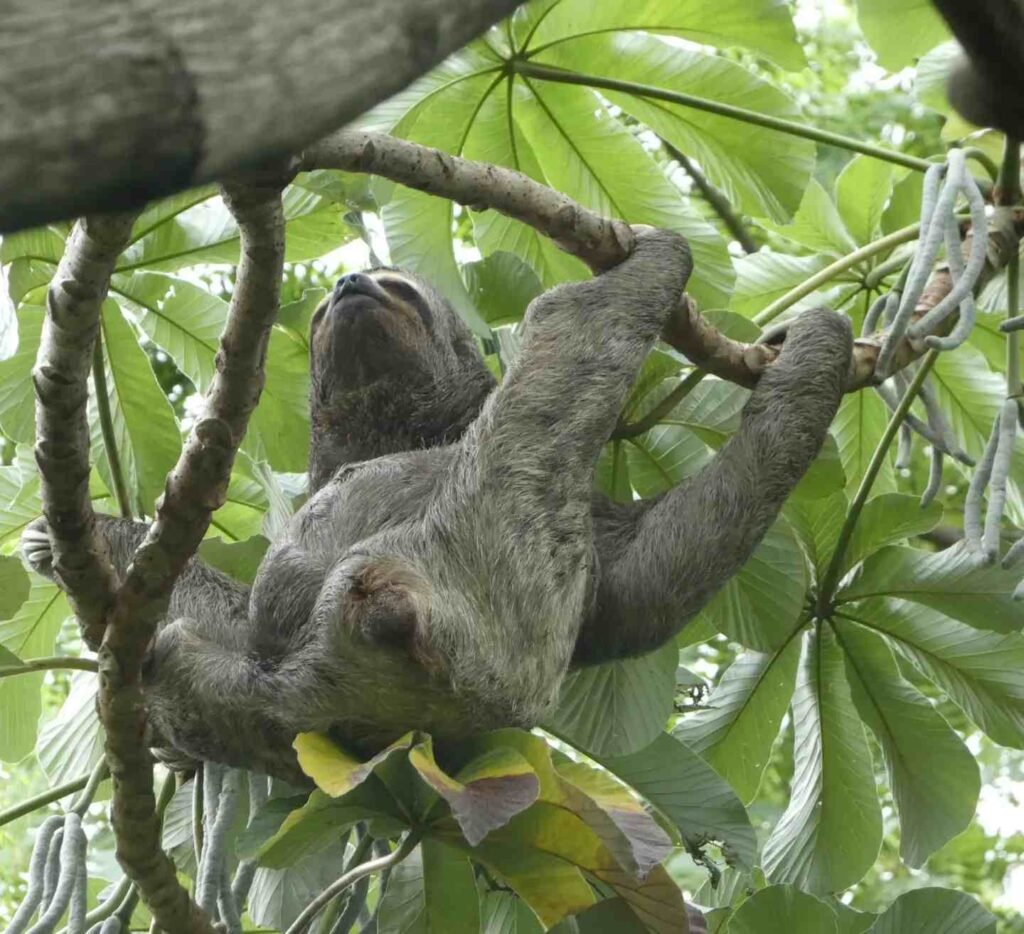
A sloth among the branches, where it spends most of its life feeding, resting and moving through the canopy.
3. What Is It Like to Look for Sloths with Our Team?
Our outings combine walking with stops to scan the trees and watch whatever wildlife appears. The guide helps locate animals and explains their behaviour and surroundings.
Once we find a sloth, we allow time for everyone to see it. Sometimes moving a few steps along the trail reveals a gap in the leaves. If the animal is high in a tree, binoculars make viewing easier.
We may see it feeding, moving between branches, or resting. Each encounter is different, and sightings cannot be guaranteed. While searching, we also look for birds, monkeys, and other wildlife along the route.
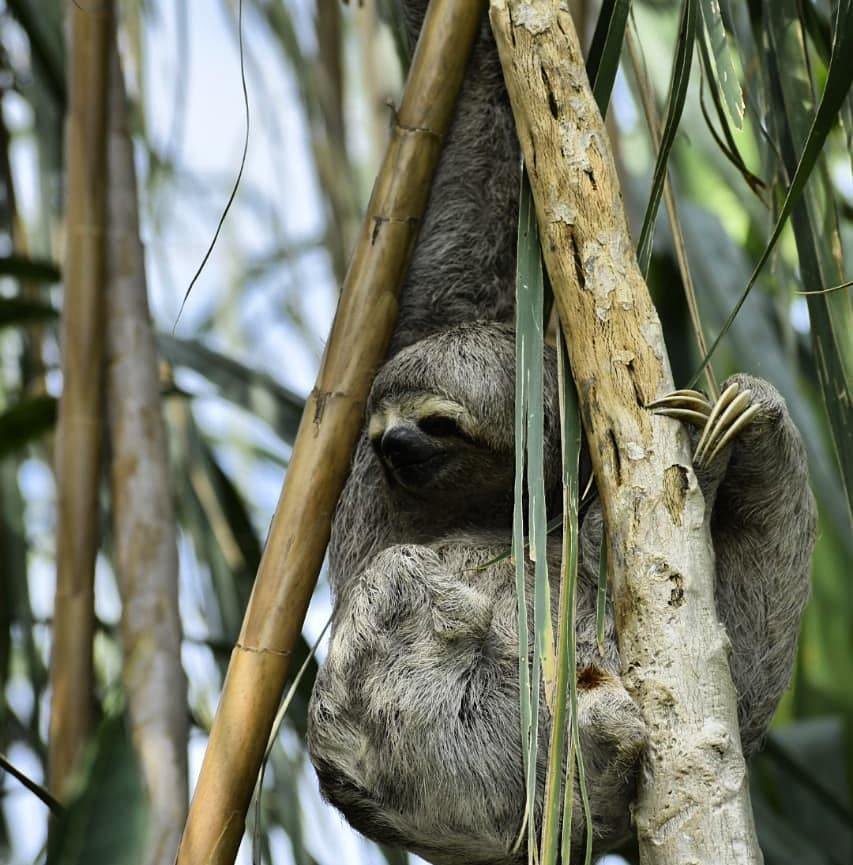
Spotting a sloth often means looking carefully between trunks, branches and leaves.
The Day a Baby Sloth Reunited with Its Mother
During one of our outings in Santa Cruz, our guests witnessed an unusual encounter: a baby sloth that had fallen from its mother was reunited with her.
Our biologist guide monitored the situation alongside the group from a respectful distance. The guide remained alert to possible threats without intervening, allowing our guests to watch the reunion unfold.
This footage from Nick’s Adventures Bolivia shows a baby sloth reunited with its mother during one of our outings in Santa Cruz.
I share it because it shows the value of observing before acting. In this instance, giving the animals space allowed us to witness what happened without disturbing them.
It was one of the encounters recorded during our sloth and wildlife outings in Santa Cruz. An encounter like this is exceptional, rather than something to expect on every outing.
4. How to Watch and Photograph Sloths Responsibly
When we find a sloth, we look for a position that provides a view while maintaining a respectful distance. Binoculars and a camera with a zoom lens help us appreciate details without approaching the animal.
The Sloth Conservation Foundation recommends watching wild sloths without touching, feeding, or handling them for photographs. During your visit, you should also:
Speak quietly and move calmly, avoiding shouting and sudden movements.
Avoid surrounding the animal or blocking its movement.
Take photographs without flash.
Never try to attract its attention with food or by shaking branches.
Stay in permitted areas, without damaging vegetation to obtain a clearer view.
If a branch obscures part of the animal, we can wait or try another angle from the trail. Photographs depend on the conditions of the encounter; we should not change those conditions at the animal’s expense.
What to Bring
For walking outdoors in Santa Cruz, I recommend comfortable, closed-toe shoes, lightweight clothing, water, a hat, sunscreen, and insect repellent. If rain is possible, bring protection for yourself and your equipment.
Binoculars are useful even if you are new to wildlife watching. You do not need a professional camera: binoculars often provide a more rewarding view of an animal high in a tree than trying to photograph it with a phone.
5. A Sloth Rescue on the School Run
Not all my encounters with sloths happen during a tour. Once, on my way to pick up my daughter from school, I found a three-toed sloth being harassed by dogs in an area with virtually no trees.
I took it by car to a protected area. There, staff at Curichi La Madre helped me remove it from the vehicle and bring it to safety.
I shared the story in this post about a sloth rescue in Santa Cruz, along with a concern: as the city expands, these animals lose trees and places to live. Free-roaming dogs pose another risk, as they did that day.
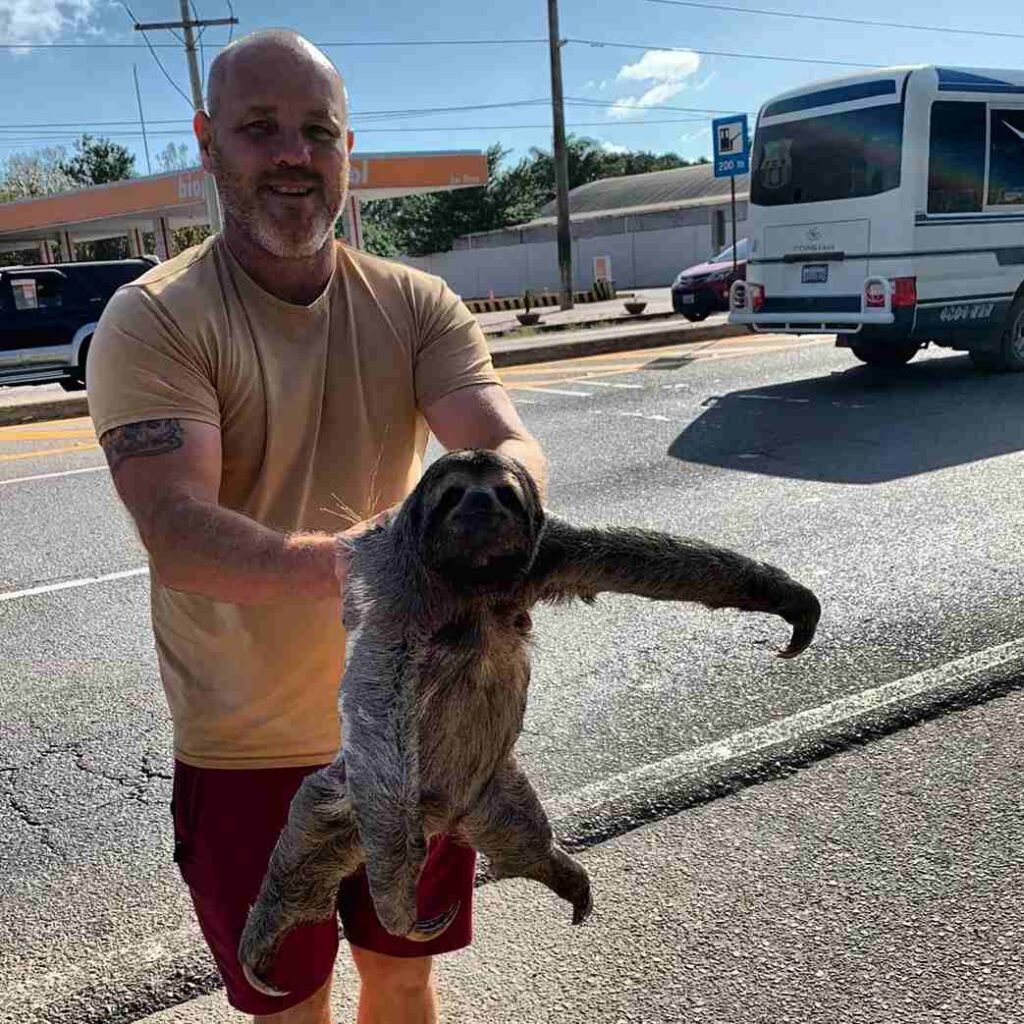
On another occasion, I removed a sloth from a road in Santa Cruz. I shared the photograph below to draw attention to the loss of habitat as the city expands. Coming from Australia, I see a parallel with the pressures that land clearing places on koalas back home: protecting wildlife also means protecting the trees they depend on.
A sloth I removed from a road in Santa Cruz during a separate rescue.
What Other Wildlife Might You See Near Santa Cruz?
Although sloths may be our main reason for heading out, other animals can appear along the way. Black-tailed marmosets and squirrels have been recorded at the Botanical Garden. Depending on the area visited, our outings also offer opportunities to look for other monkeys, toucans, other birds, and reptiles.
If you would like to watch sloths and discover the wildlife around Santa Cruz, at Nick’s Adventures we organise private tours with specialist guides, tailored to your interests and the time you have available. Contact us and tell us what you would like to see — we can help you plan your experience.
Nicholas McPhee is the Australian-born co-founder of Nick’s Adventures Bolivia, a tour operator based in Santa Cruz de la Sierra and established in 2012. He specializes in wildlife expeditions, jaguar tracking, and nature-focused travel across Bolivia.
bolivia By Nicholas McPhee, Co-founder of Nick’s Adventures Bolivia You do not need to travel deep into the Amazon to see a wild sloth in Bolivia. In Santa Cruz de
bolivia Why Visit Bolivia? 7 Reasons for Nature and Wildlife Lovers By Nicholas McPhee, Co-founder of Nick’s Adventures Bolivia There’s much more to Bolivia than the Uyuni Salt Flats and
amazon & jungle Madidi National Park vs The Bolivian Pampas: Which Should You Choose? An honest expert comparison — wildlife, access and what you’ll actually see The short answer: they’re radically
amazon & jungle Amazon Jungle Tours Bolivia: Complete Guide to Madidi & the Pampas Everything you need to know before booking your Bolivia Amazon tour An Amazon jungle tour in
uyuni salt flats Private vs Budget Uyuni Salt Flat Tours in Bolivia Safety, Comfort, and Experience Compared With more than 90 registered tour operators in the town of Uyuni, the range of
Wildlife & Travel Private Uyuni Salt Flat Tours in Bolivia: The Complete Guide Travel in style and comfort The Salar de Uyuni is the world’s largest salt flat, covering 10,582 square